Shoulder Arthroscopy & Joint Preservation in Tyler, TX
Shoulder arthroscopy lets Dr. David Kummerfeld diagnose and treat many shoulder problems through a few small incisions, from a simple decompression for impingement to advanced joint-preserving reconstruction. The goal is to protect the shoulder you were born with for as long as possible, and to be honest about when preserving it is no longer the better path.
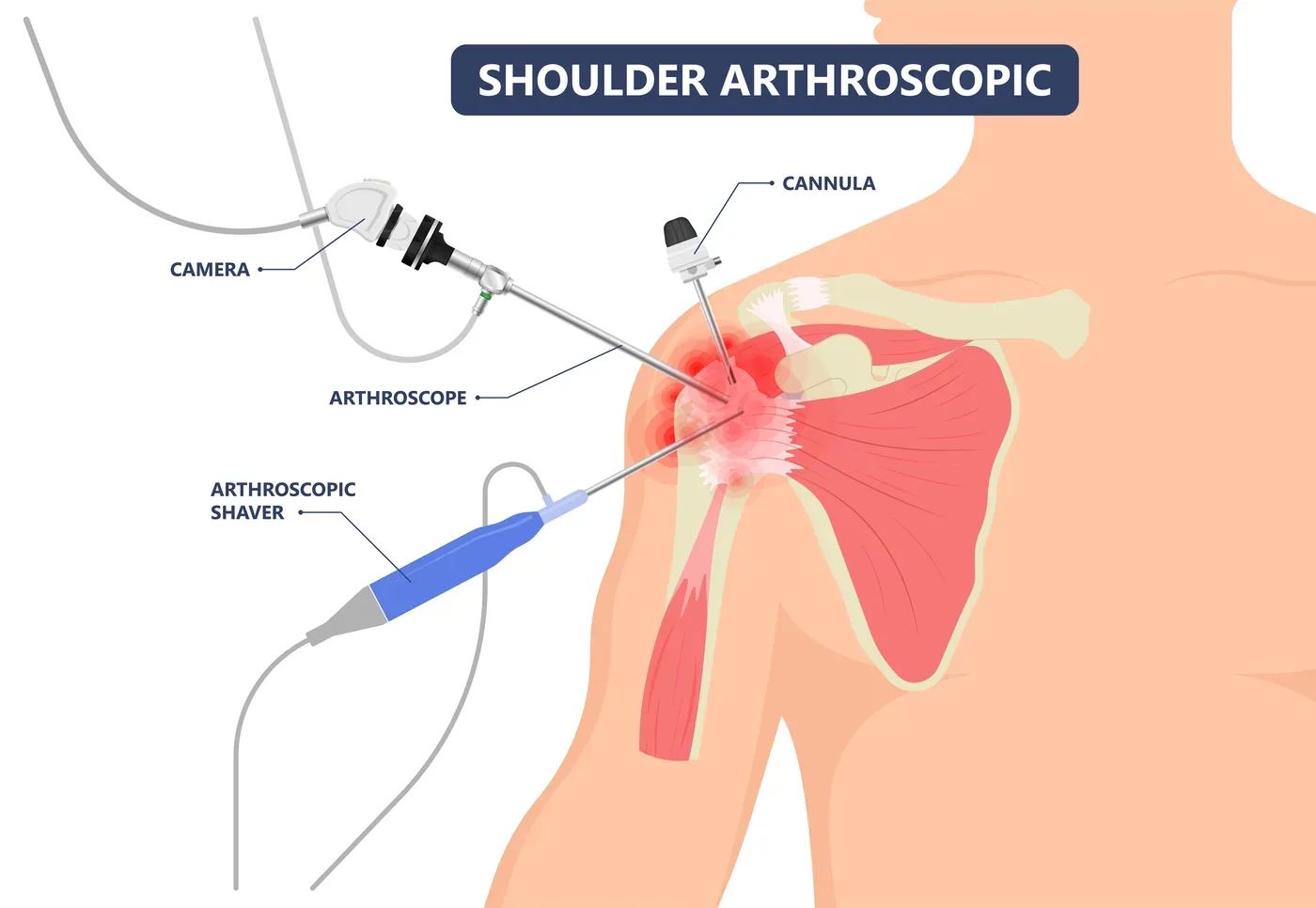
How shoulder arthroscopy works
An arthroscope is a pencil-width camera that projects a magnified view of the inside of the joint onto a screen. Small instruments pass through separate incisions to repair, trim, or remove damaged tissue. Compared with open surgery, arthroscopy means smaller scars, less disruption of the muscles around the joint, and usually a faster return of motion. Nearly all of Dr. Kummerfeld’s arthroscopic procedures are outpatient, with a nerve block for comfort, so many patients go home the same day.
Conditions Dr. Kummerfeld treats arthroscopically
Arthroscopy is a tool rather than a single operation. Depending on what is wrong, it may be used for:
- Impingement and bursitis: removing inflamed bursa and the bone spur that pinches the rotator cuff (subacromial decompression)
- Rotator cuff tears: reattaching torn tendons to bone, covered in depth on the rotator cuff repair page
- Labral tears and instability: repairing the labrum and, when needed, rebuilding the socket, covered on the instability page
- Biceps tendon problems: biceps tenodesis or tenotomy for a frayed, unstable, or painful long head of the biceps
- Frozen shoulder: capsular release for stiffness that has not improved with time and therapy
- AC joint arthritis: distal clavicle excision to relieve pain at the top of the shoulder
- Loose bodies and early arthritis: removing fragments and smoothing damaged cartilage to buy time for the native joint
Protecting the native shoulder
For younger and active patients, replacing the shoulder is not always the best first answer. Joint-preserving procedures aim to relieve symptoms and restore function while keeping your own joint: cleaning up early arthritis, releasing a tight capsule, treating the biceps, partially repairing or augmenting a large rotator cuff tear, or transferring a healthy tendon. Dr. Kummerfeld will be candid about how long a preserving procedure is likely to help and when a replacement would be the more durable choice.
After arthroscopic surgery
Recovery depends on what is done. A simple decompression may need only a few days in a sling and a short course of therapy, while a repair of the rotator cuff or labrum requires several weeks of protection and a longer program. A nerve block typically numbs the arm for the first day, ice and elevation control swelling, and therapy usually begins within the first one to two weeks. Before surgery, Dr. Kummerfeld will give you a realistic timeline for returning to driving, work, and recreation.
Talk with a shoulder specialist in Tyler
Dr. Kummerfeld will tell you whether an arthroscopic or joint-preserving procedure is the right fit for your shoulder, or whether a simpler plan will do.