Rotator Cuff Repair in Tyler, TX
A torn rotator cuff can make it painful to sleep, reach, or lift, and some tears enlarge over time. Dr. David Kummerfeld treats tears of every size, from partial tears that settle with therapy to large, retracted tears that call for advanced arthroscopic repair, a joint-preserving reconstruction, or a tendon transfer. The right answer depends on the tear, the tendon, and you.
How the rotator cuff works, and how it tears
Four muscles run from the shoulder blade to the top of the arm bone and blend into a cuff of tendon that wraps around the ball of the shoulder. Together they keep the ball centered in the socket and let you lift and rotate the arm. Tears happen two ways: suddenly, from a fall or a heavy lift, or gradually, as the tendon frays with age and use. Many people over sixty have some degree of wear without knowing it; the tears that need treatment are the ones that hurt or weaken the arm.
Typical signs are pain on the outside of the shoulder and upper arm, worse at night and when lying on that side, weakness lifting or rotating the arm, and a catching or crackling feeling with movement. Sudden weakness after an injury should be evaluated promptly, because tendon that retracts and the muscle that withers behind it become harder to repair with time.
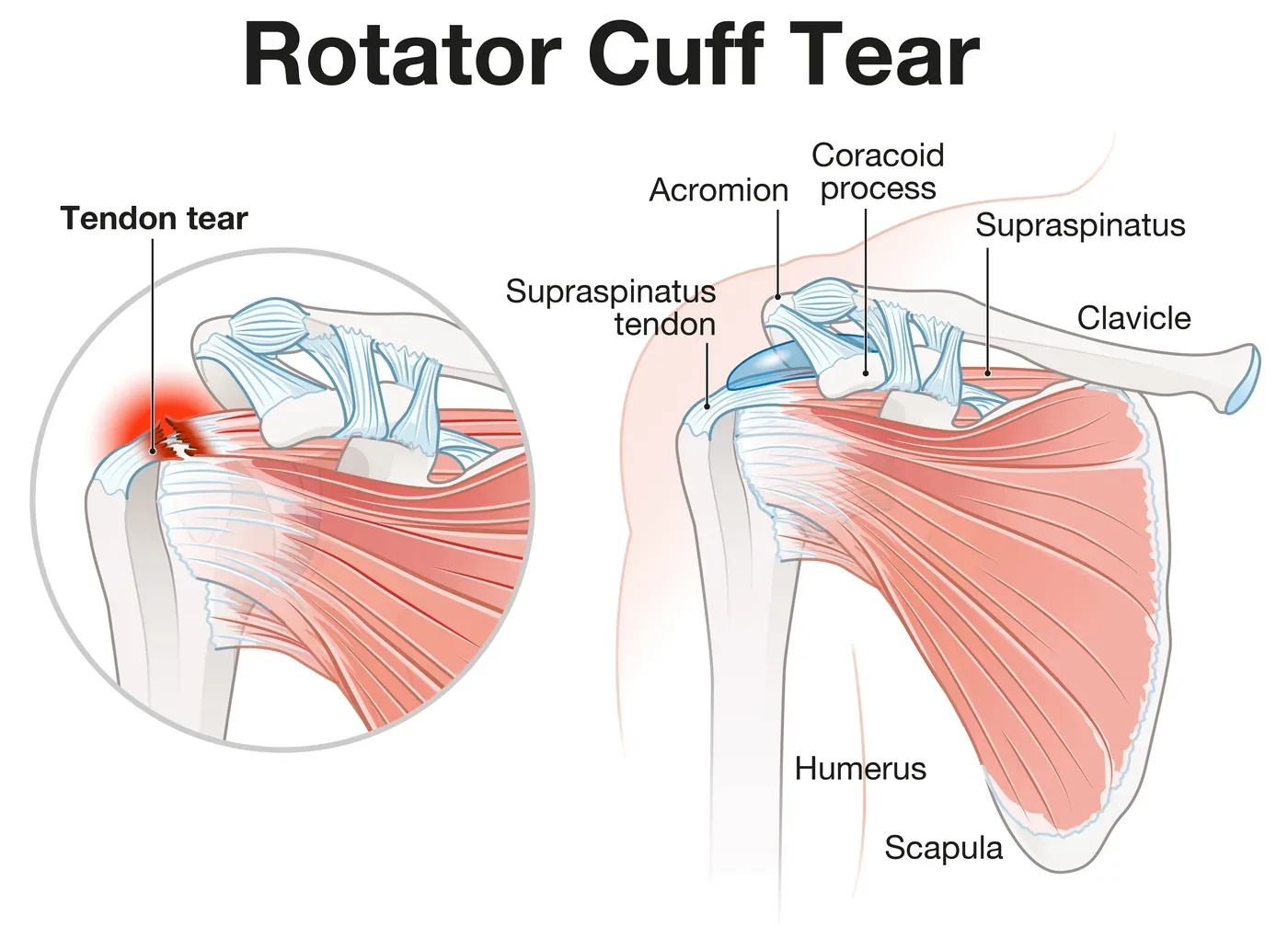
A healthy rotator cuff compared with a full-thickness tear.
How Dr. Kummerfeld decides
Not every tear needs surgery, and not every tear can be repaired. An MRI shows the size and pattern of the tear, how far the tendon has pulled back, and whether the muscle behind it is still healthy. Those findings, along with your age, your goals, and how long the tear has been present, drive the recommendation.
Many improve with a targeted therapy program, activity changes, and in some cases an injection. Surgery is considered if pain and weakness persist after several months of good care.
Arthroscopic repair reattaches the tendon to bone with suture anchors. Earlier repair generally means better tendon quality and a more reliable result, especially after an injury.
Partial repair, tissue augmentation, and other joint-preserving techniques may restore function while protecting the native shoulder. These are the cases where fellowship training matters most.
When the tendon cannot be brought back to bone, a tendon transfer may help restore strength in some younger, active patients, and a reverse shoulder replacement may be an option to consider once arthritis has developed.
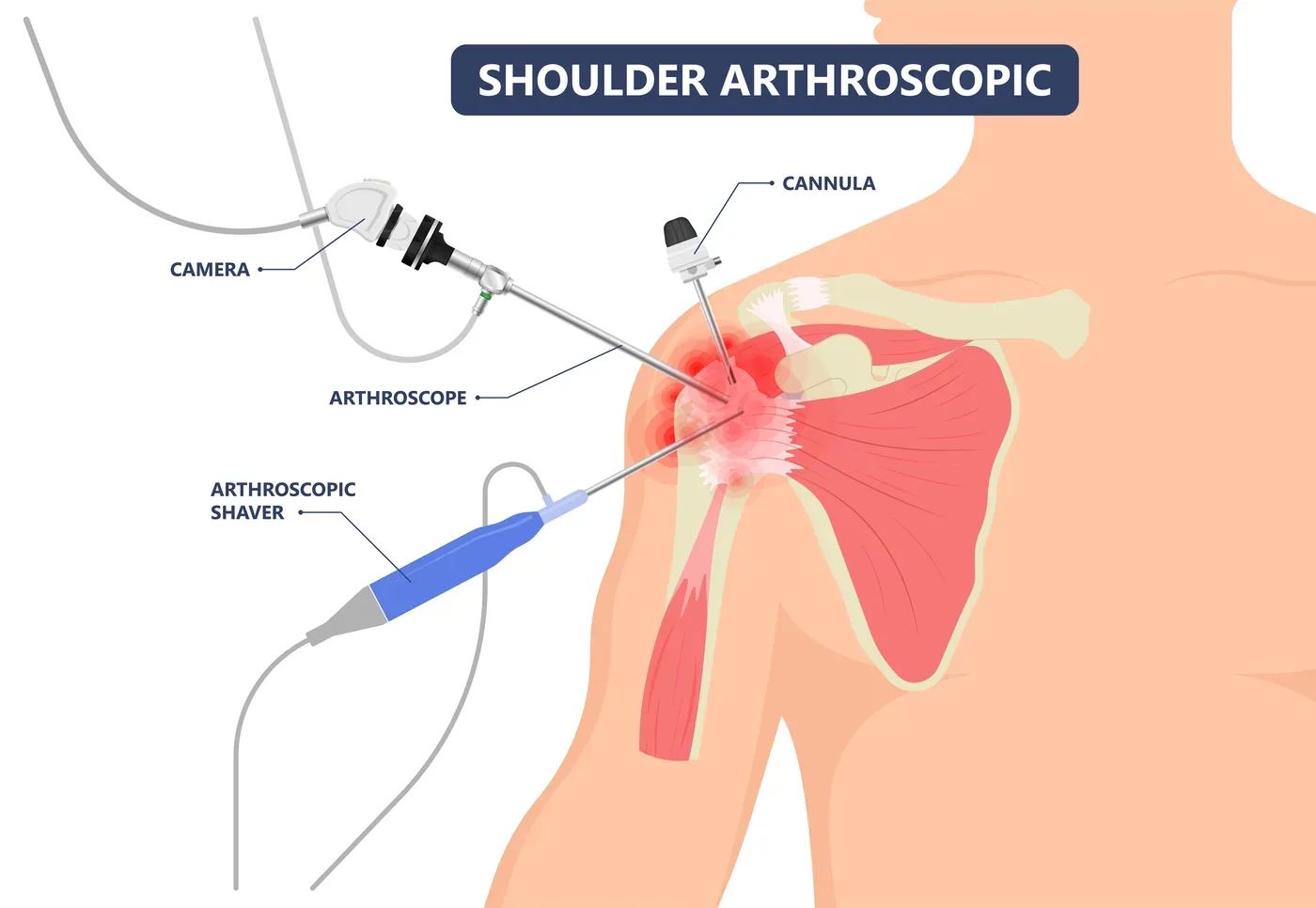
Arthroscopic repair reattaches the tendon to bone through small incisions.
What happens during surgery
Working through several small incisions with a camera and instruments, Dr. Kummerfeld cleans inflamed tissue from the joint, prepares the bone where the tendon belongs, and secures the tendon back to its footprint with suture anchors. Other problems found at the same time, such as a frayed biceps tendon or a bone spur pressing on the cuff, are addressed in the same setting. Surgery is outpatient, with a nerve block for comfort, and takes about an hour to ninety minutes.
Healing a repaired tendon takes patience
A repaired tendon heals to bone slowly, and protecting it early helps the repair last. Expect a sling for the first several weeks, therapy that restores motion before it builds strength, and a return to most activities by four to six months, with gains continuing up to a year. Tear size, tissue quality, smoking, and diabetes all affect how reliably the tendon heals, and Dr. Kummerfeld will give you a timeline matched to your repair rather than a generic one. Risks include stiffness, failure of the tendon to heal (more likely with large, long-standing tears), infection, and nerve injury.
Had a repair elsewhere that did not heal or still hurts? Dr. Kummerfeld also evaluates failed rotator cuff repairs and can discuss revision repair, tendon transfer, or replacement depending on what is found.
Get a clear plan for your rotator cuff tear
An exam and MRI review with Dr. Kummerfeld will tell you what kind of tear you have and what your realistic options are. He sees patients at Azalea Orthopedics in Tyler.