Total Shoulder Replacement in Tyler, TX
When arthritis has worn through the cartilage but the rotator cuff is still strong, an anatomic total shoulder replacement is designed to rebuild the joint in its natural shape. Dr. David Kummerfeld resurfaces both the ball and the socket with the InSet® Total Shoulder System, and for appropriate patients he does it without detaching the subscapularis tendon, the technique known as the “slingless” shoulder replacement.
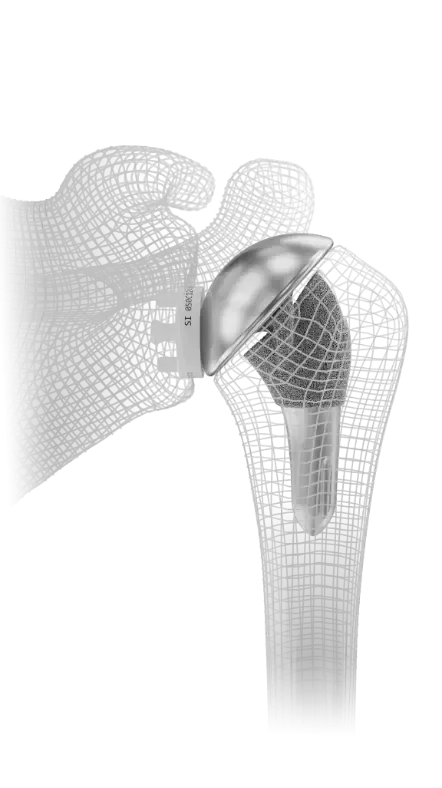
What total shoulder replacement is meant to do
People rarely come in asking for an implant. They come in because the deep ache has started waking them at night, because reaching into a cabinet or fastening a seatbelt has become a negotiation, or because the grinding they feel when they lift the arm has gotten impossible to ignore. Anatomic replacement is designed to address exactly that: it replaces the rough, worn surfaces with smooth ones so the joint can glide again, while keeping the normal arrangement of the shoulder so your own muscles keep doing the work they were built for.
- Relief from the constant arthritic ache, including night pain
- Easier reach for dressing, washing hair, and lifting a bag to a shelf
- The chance to return to golf, swimming, fishing, yard work, and travel
- An implant shaped and positioned to match your own anatomy
- A bone-conserving design that keeps future options open
How the shoulder works, and what arthritis does to it
Three bones meet at the shoulder: the upper arm bone (humerus), the shoulder blade (scapula), and the collarbone (clavicle). The rounded top of the humerus rests against a shallow cup on the shoulder blade called the glenoid. Smooth cartilage covers both surfaces so they slide without friction, and the four rotator cuff tendons hold the ball centered in the socket while the deltoid provides much of the power to lift the arm.
Arthritis strips that cartilage away. Once bone is rubbing on bone, the joint stiffens, bone spurs form around the rim, and the socket itself can wear into a slope. The pain is not only in the joint surface; the surrounding muscles tighten and tire from working against a joint that no longer moves freely.
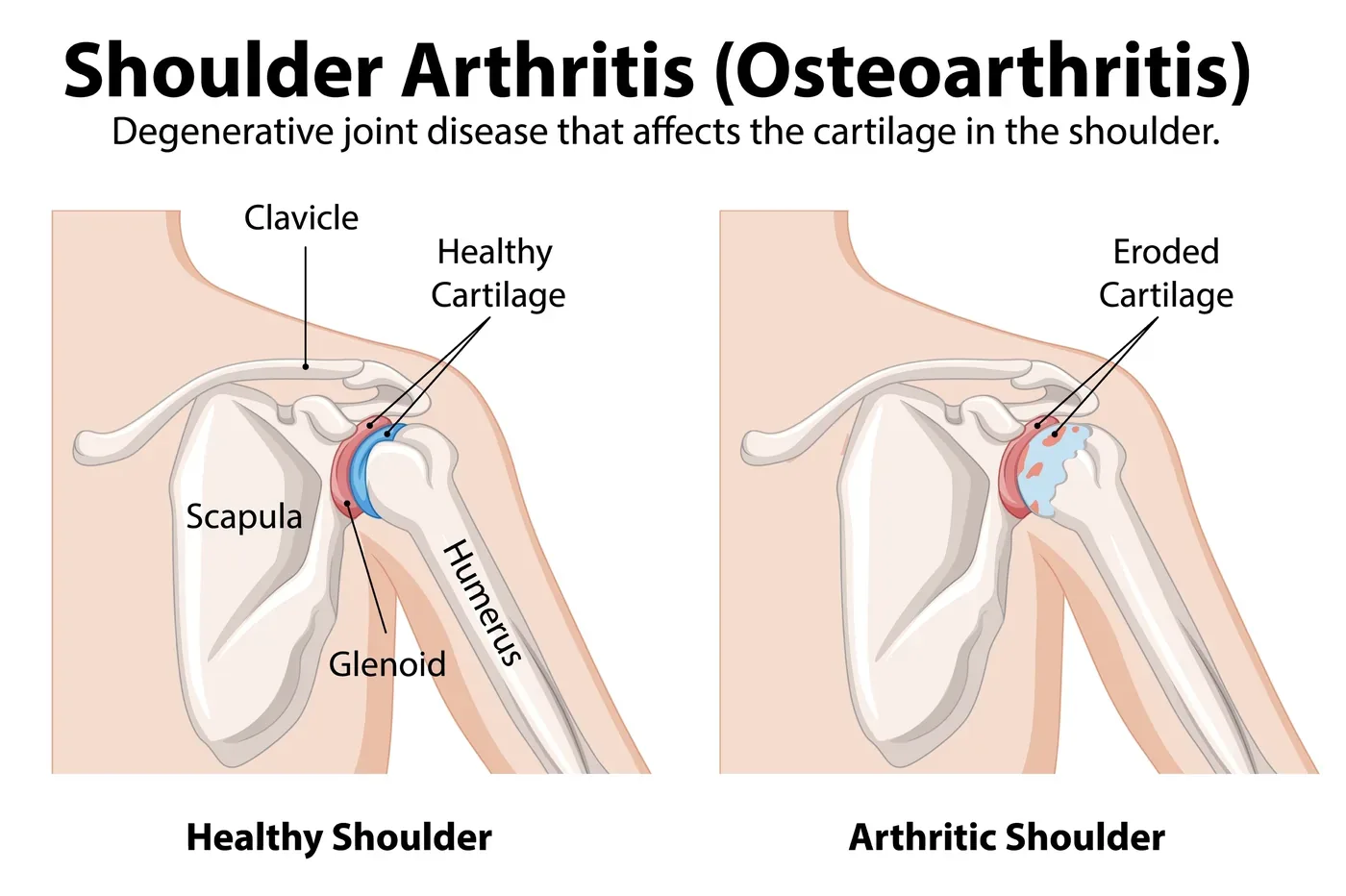
A healthy shoulder joint compared with an arthritic one.
Conditions treated with anatomic replacement
An anatomic replacement depends on a working rotator cuff, so it is the right operation when the joint surface is the problem and the cuff is not. The conditions Dr. Kummerfeld most often treats this way:
- Osteoarthritis: gradual cartilage loss with age and use, and the leading reason for shoulder replacement
- Inflammatory arthritis, including rheumatoid arthritis, where the joint lining erodes cartilage over time
- Post-traumatic arthritis that appears years after a fracture or dislocation
- Avascular necrosis, in which loss of blood supply causes part of the humeral head to soften and collapse
When the rotator cuff is torn beyond repair, a reverse shoulder replacement is usually the better operation.
Nonsurgical care comes first
Before recommending a replacement, Dr. Kummerfeld typically works through therapy to maintain motion, changes to how the arm is used, anti-inflammatory medication, and sometimes a cortisone injection. Many people get years of good use from those steps. Replacement makes sense when the pain and stiffness keep returning and begin costing you sleep, independence, work, or the activities that matter to you. Our nonsurgical care page covers these options in more detail.
Keeping the subscapularis attached
The subscapularis is the broad rotator cuff tendon across the front of the shoulder. In a conventional anatomic replacement it is cut from the bone to open the joint, then stitched back at the end. That repair is the most fragile part of the operation for the first six weeks: protecting it is why patients are told not to reach behind the back, rotate the arm outward, or push up from a chair, and a repair that fails to heal is one of the known reasons an anatomic replacement can be disappointing.
Dr. Kummerfeld offers a subscapularis-sparing approach for appropriate patients. He reaches the joint through the rotator interval, the natural gap between the subscapularis and the tendon above it, and places the implants without taking the tendon off the bone. With no front-of-shoulder repair to protect, there is no need to immobilize the arm: patients typically leave without a sling, early motion may be more liberal, therapy may progress sooner, and the tendon that controls inward rotation is left as it was. That is why patients call it the “slingless” shoulder replacement.
The approach demands careful planning and is not suited to every shoulder. Severe deformity, significant bone loss, or scarring from earlier surgery can make the traditional exposure the safer choice, in which case the arm is protected in a sling for the first few weeks. He makes that call from your CT scan and exam, and he will tell you which approach he recommends and why.
The InSet® Total Shoulder System
Dr. Kummerfeld performs anatomic replacement with the InSet® Total Shoulder System from Shoulder Innovations. It comes in short-stem and stemless versions, so the humeral side can be matched to your bone quality and anatomy.
Built around the socket
The socket component has historically been the weak link in total shoulder replacement. Conventional designs sit on the face of the glenoid, and over many years that surface fixation can rock loose, the leading reason anatomic replacements are revised. The InSet® glenoid is instead recessed into a precisely prepared pocket in the socket bone, supported by the dense rim rather than perched on top of it. Sitting inside the bone is intended to limit the rocking forces that contribute to loosening, and the design has been the subject of peer-reviewed follow-up studies focused on that question.
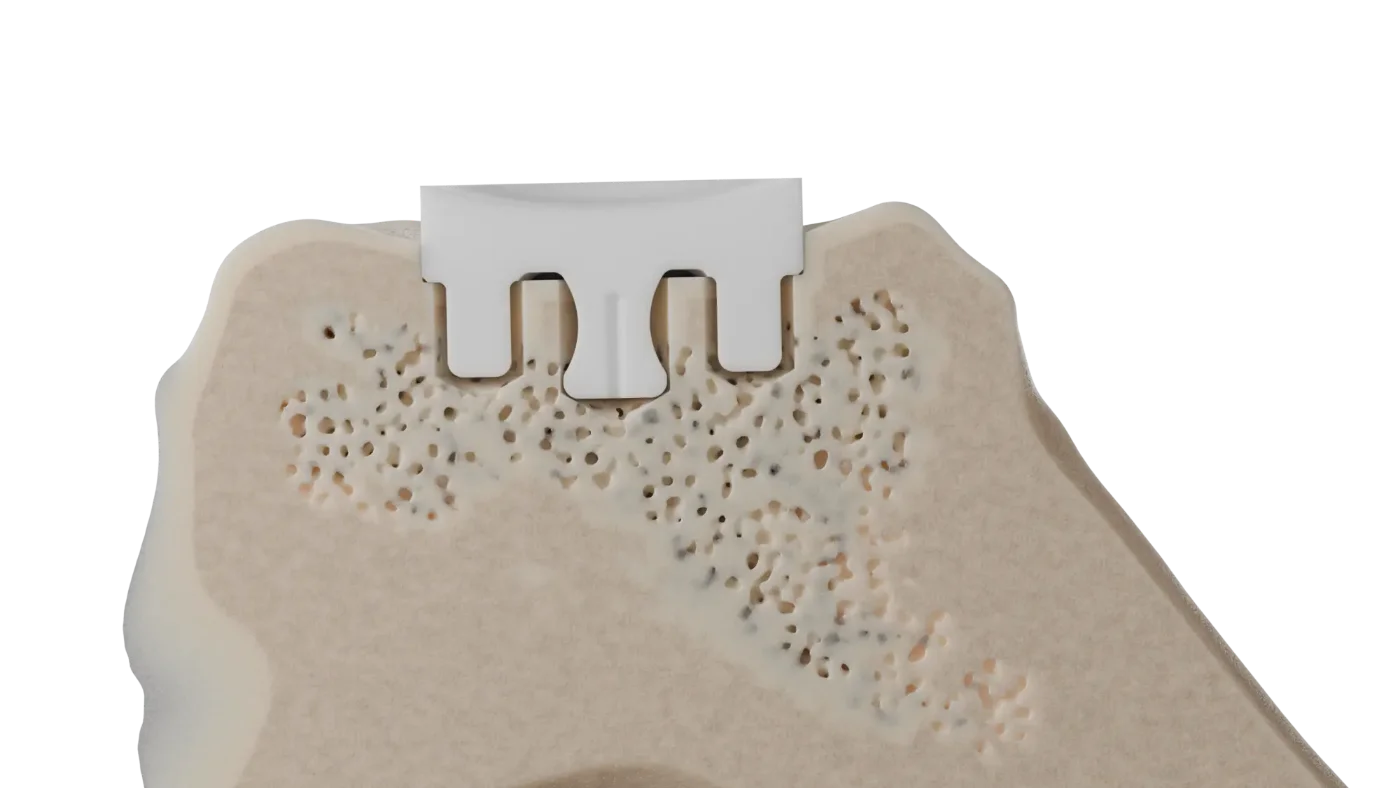
The InSet® glenoid seated within the socket bone.
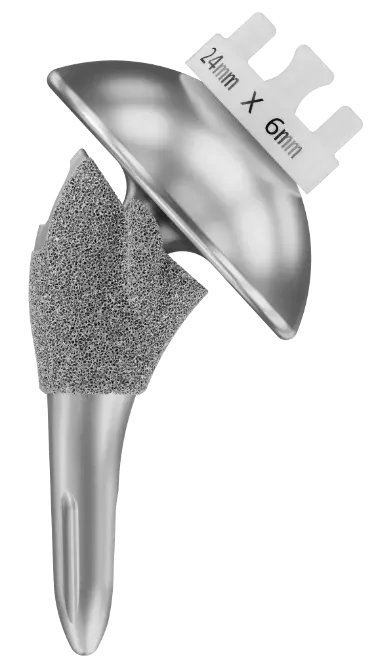
The InSet® anatomic implant in a stemless configuration.
Designed for your bone to grow into
The humeral components are titanium with a textured, porous surface that your bone can grow into, so the implant is designed to anchor more firmly as you heal. The system is also built to remove as little bone as possible. That matters for the long term: if your shoulder ever needs another operation, preserved bone gives the surgeon more options, and with a stemmed implant it may be possible to keep the stem and convert the shoulder to a reverse configuration rather than starting over.
Mapped in three dimensions
How accurately the implant is positioned has a lot to do with how well a replacement works and how long it lasts. For most patients, Dr. Kummerfeld uploads a CT scan into planning software that recreates the shoulder in three dimensions, then selects the implant size and sets its exact angle and depth before surgery begins.
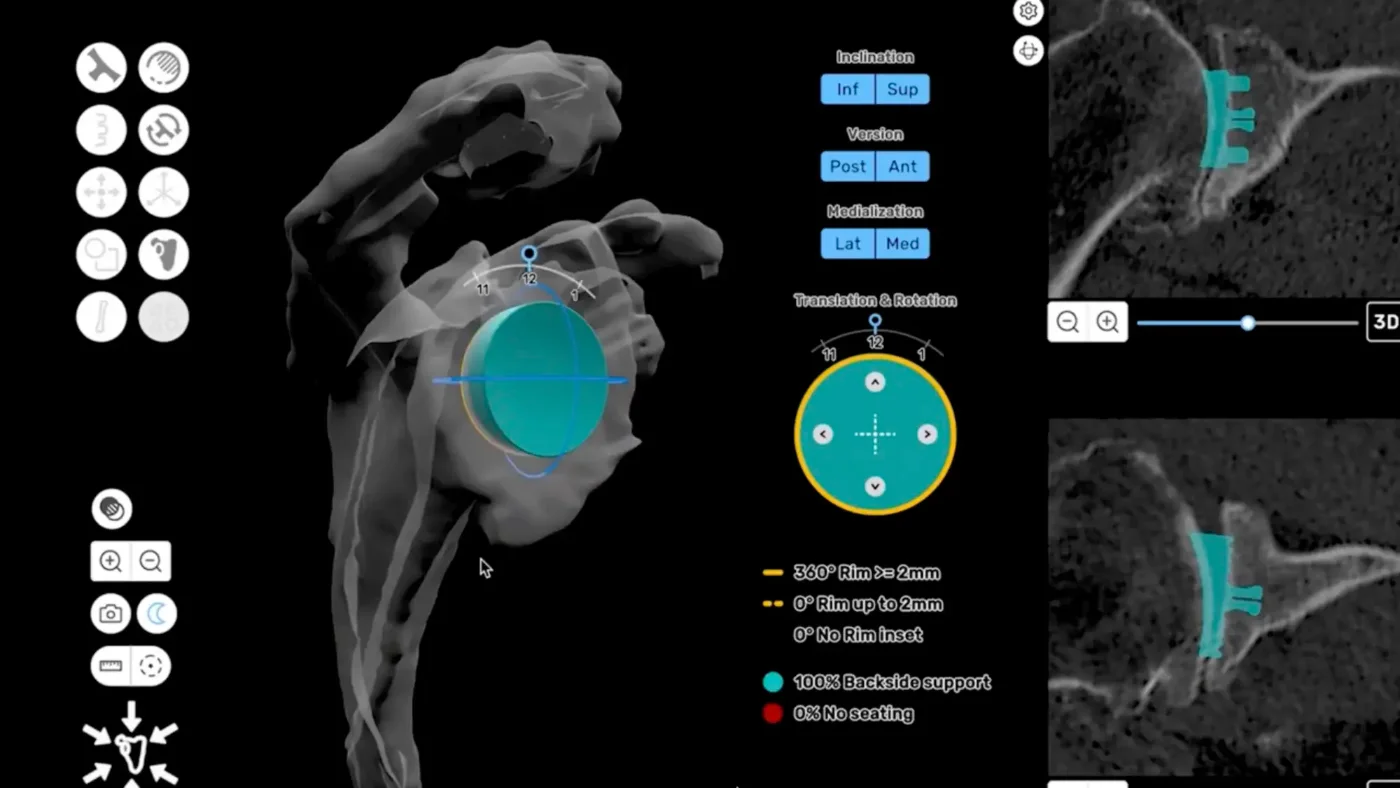
A 3D surgical plan built from your CT scan.
Preparing for surgery
Once you decide to move forward, the team coordinates the details: a CT scan for planning, a pre-operative medical check, and a review of your medications. Quitting tobacco ahead of time can make a real difference in healing. You will get written instructions about eating and drinking the night before, a skin-cleansing routine, and what to bring. Button-front or zip-up shirts make the first few weeks easier, and arranging for someone to drive you home and stay the first night is a good idea.
On the day of surgery you will receive general anesthesia, and most patients also get a nerve block that keeps the arm numb well into the evening. The replacement itself takes one to two hours at Baylor Scott & White Texas Spine & Joint Hospital in Tyler. Before discharge you will learn your first exercises and how to manage dressing and daily routines. Many patients go home the same day; some stay overnight.
What recovery looks like
Recovery unfolds in phases: protecting the shoulder early, restoring motion, then rebuilding strength. Dr. Kummerfeld’s team adjusts the pace to you, and the biggest factor you control is doing your therapy. A typical progression:
You use the arm for light daily tasks such as eating, dressing, and typing while the incision heals, and begin gentle motion exercises. Many people notice the arthritic ache has already eased.
Light use of the arm returns for meals, writing, and dressing as therapy steadily restores range of motion.
Strengthening begins. Driving, cooking, and most household chores are usually back.
Strength and stamina keep building. Golf and swimming usually return around three months, and many patients are back to the activities they had set aside, with gains continuing up to a year.
Risks to consider
Serious problems after anatomic shoulder replacement are uncommon, but every surgery carries risk: anesthesia reactions, infection, bleeding, injury to nerves or blood vessels, stiffness, fracture, failure of a subscapularis repair when one is performed, gradual wear or loosening of the implant, and the possibility of a future revision. Dr. Kummerfeld reviews your personal risk factors in detail. Protocols for antibiotics, blood clot prevention, and pre-operative optimization are in place to help keep those risks low. Results vary.
Questions patients ask
How long can a total shoulder replacement last?
Anatomic replacement has a strong long-term record, and many patients do well with their new shoulder for well over ten years. A stable socket component is a major factor in how long an implant lasts, which is one reason Dr. Kummerfeld uses the InSet® glenoid. Individual results vary.
How much pain should I expect afterward?
Soreness peaks in the first week or two and is managed with a nerve block, medication, and ice. Many patients find the arthritic pain they had before surgery eases quickly, and incisional soreness fades steadily after that.
What does "slingless" actually change for me?
It means the subscapularis tendon at the front of your shoulder is never detached, so there is no tendon repair to protect in the early weeks and no need for a sling. For appropriate patients that may mean fewer restrictions and an easier start to therapy. It does not change the implant or the goal of the surgery.
When can I drive, golf, or get back in the deer stand?
Desk work often resumes within a few weeks. Driving usually returns once you are off narcotic pain medication and can control the arm comfortably, often within a few weeks. Golf and swimming generally return around three months. Hunting, lifting, and more demanding activities are decisions you and Dr. Kummerfeld make together based on your strength.
How is a total different from a reverse replacement?
An anatomic total shoulder replacement preserves the joint’s natural arrangement and depends on a healthy rotator cuff. A reverse replacement swaps the ball and socket so the deltoid can lift the arm when the cuff is beyond repair. The shoulder replacement overview compares the two.
Talk with Dr. Kummerfeld about total shoulder replacement
Request an appointment online or call the office, and the team will help you take the first step toward a shoulder that may move more comfortably.